Charlotte Scanlan
Charlotte Scanlan
- Coach Profile
Charlotte Scanlan’s love for rugby league spans from the highest level all the way down to the kids running around at their local park.
A former Kiwi Fern, Scanlan now works as a Community Manager at the Warriors Community Foundation, sharing the benefits the sport can bring to many across the motu.
It’s something that’s helped her with her coaching abilities too, coaching both locally and internationally.
“When I’m out in the community, it will always ground you into why you should play sport, and why it is such a powerful vehicle for social change,” Scanlan says.
“In just the way that you get your volunteers to come in, the way that clubs are supporting their rangatahi and tamariki through the sense of community that you get from that, it always helps bring me down to earth.”
Scanlan fell in love with coaching while she was still playing over in Japan, really noticing how big of an impact a good coach can have. She took those lessons back to New Zealand with her, and looked more into coaching.
“My first proper little coaching gig was at under 7s rugby league team of my nephews, for Point Chev Pirates, just in my spare time and it was so much fun and super rewarding,” she says, laughing about how draining young kids can be.
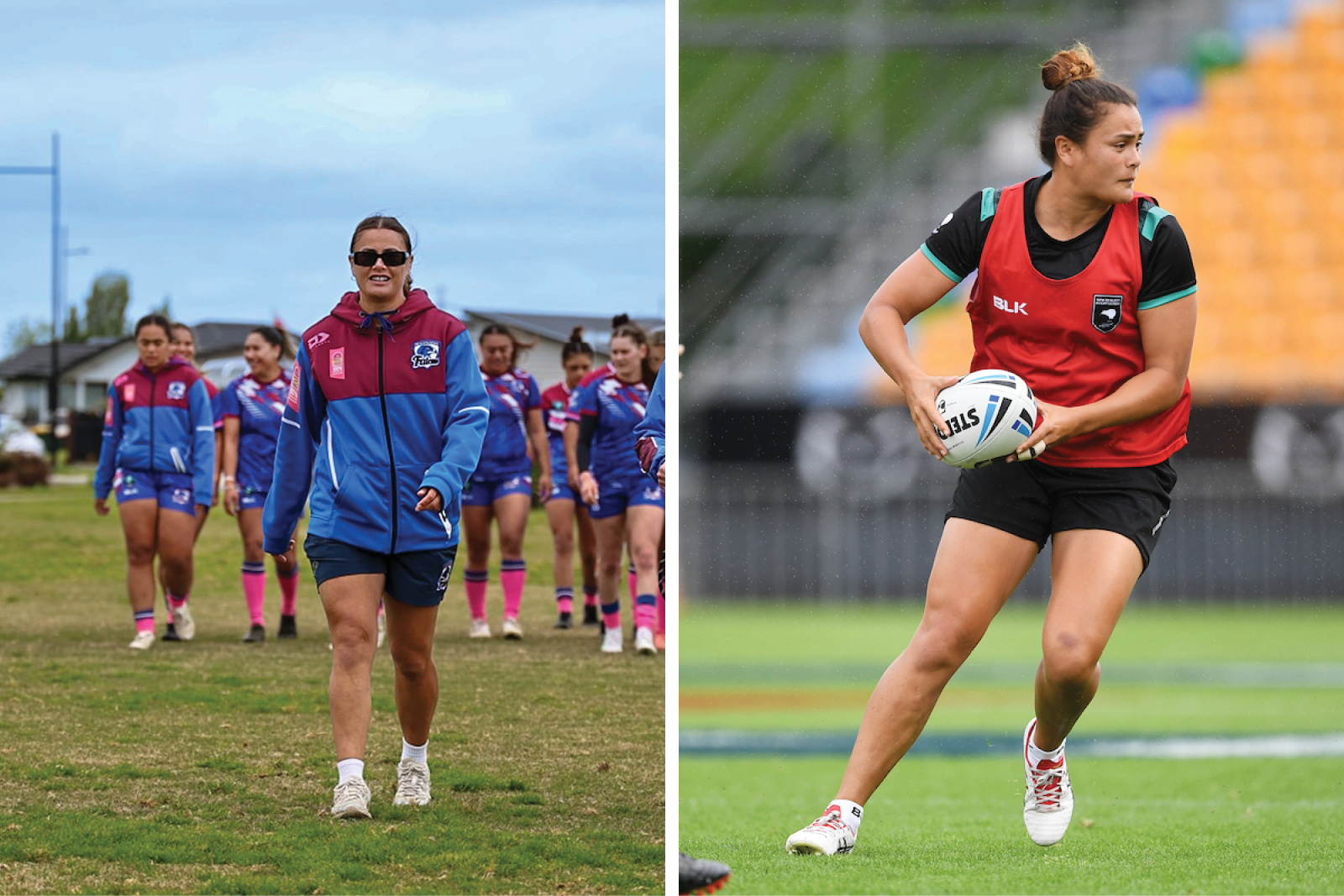
She’s now coaching the Akarana women in Auckland in the NZRL Sky Sport Women’s Premiership, and works with the Papua New Guinea women’s team as an assistant coach.
One of the biggest things she’s working on as a coach is building connection with her players.
“If I’ve got a squad of 25 people, how do I connect with every one of them, and how do I make them feel valued and uplifted,” Scanlan says.
“It’s definitely a learning curve for me with different personalities cause you just naturally do bond with different personalities. So how do you really show value to those in your squad and make them feel seen.”
Growing up in the Manawatū, sport was a big part of Scanlan’s life, and where she found her community.
“It pretty much just gave me a safe space to express myself, hang out with my friends and just have a good time,” she says.
“Not getting in any trouble, always kept my weekends busy, my afternoons busy, my lunchtimes busy, it really kept me down the right track at school.”
At Feilding High School, Scanlan’s coach Rob Jones was a big inspiration.
“He’s probably one of the first people that made me believe there was a professional side to sports, even though at the time rugby wasn’t,” she says.
“He was just the most uplifting coach in terms of his standards were very, very high, but he supported you in every way to make sure that you knew you could do it. It was never too hard of a challenge, he was always there to help you along the way and support if you did fall down at any point.”
Despite living overseas now, Jones is still so supportive of his former students, Scanlan describing him as one of the best champions of women’s and girls sport.
Scanlan has had a lot of good coaches that she’s learned from in her playing time, but has a special appreciation for those who went above expectations.
“Looking back, those that did go that extra mile and did really value learning their craft more, upskilling what their IQ was, I think now I would clap even harder for those coaching that do go above and beyond for the athletes, that is in a way of service rather than just self recognition.”
Over the last year, Scanlan has been a part of the Te Hāpaitanga programme, an 18-month initiative to support more women in high performance coaching spaces. It’s been an absolutely huge opportunity for her.
“I think for me the biggest part is actually the confidence I gain from having a network of other high performing women, in a space that isn’t competitive,” she says.
“There’s still that mentality around only one female can be at the table, so being able to have this space that’s not competitive at any means… I could not do any of these other sports so I think it’s super uplifting and empowering to have them in and around in terms of conversations.”
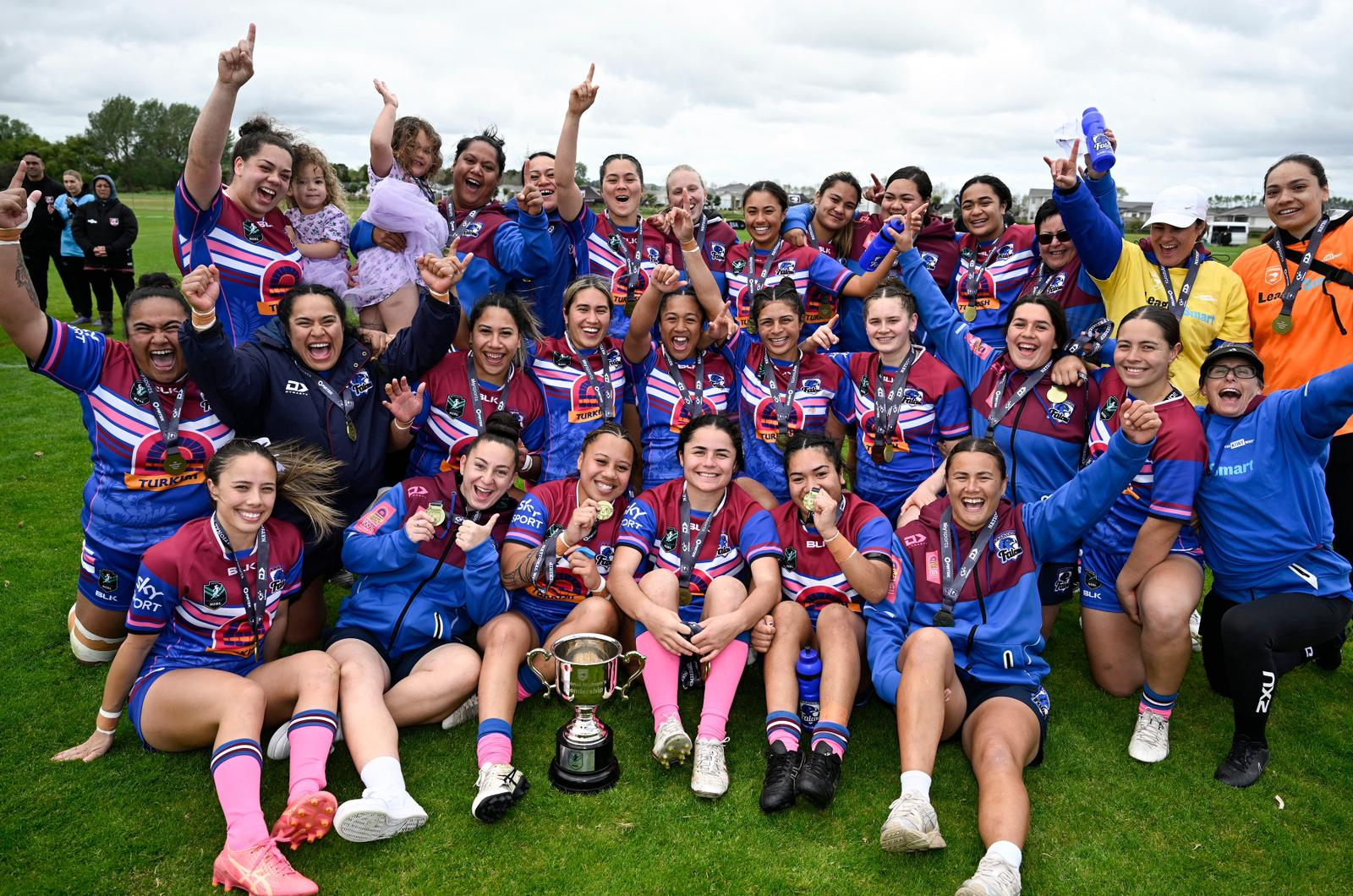
The endless knowledge offered to them by facilitators in such a short time has been transformative to Scanlan, who believes in being an advocate for other coaches.
“Always making sure that you’re trying to lift each other up or offering support in any way, because it is tough to be a head coach, or any coach, and you never know unless you’re there to support.
“We need to put ourselves on pedestals because how else is anyone else gonna see it?”
Scanlan loves the every day parts of coaching, seeing skills executed in games, or players trying their best to improve. But it’s also those specific relationships created that are special to her.
She recounts one player who took not being selected for a final quite hard, but later reaching back out and thanking Scanlan for her coaching efforts and pushing her to be her best.
“That moment shows that she thought I was approachable enough to come back to me and didn’t just park it completely, and just the long-lasting effect coaching can have on someone’s life.”
Scanlan is always learning from her players, staying open to exploring and experimenting with different coaching styles.
“Have fun with it, be kind on yourself in terms of if it’s not going right, don’t beat yourself up about it, you’re there for them,” is her advice for other coaches.
“And if you have that openness and that willingness to adapt, evolve and grow, then you’ll be a great coach.”