Steve Kent
Steve Kent
- Coach Profile
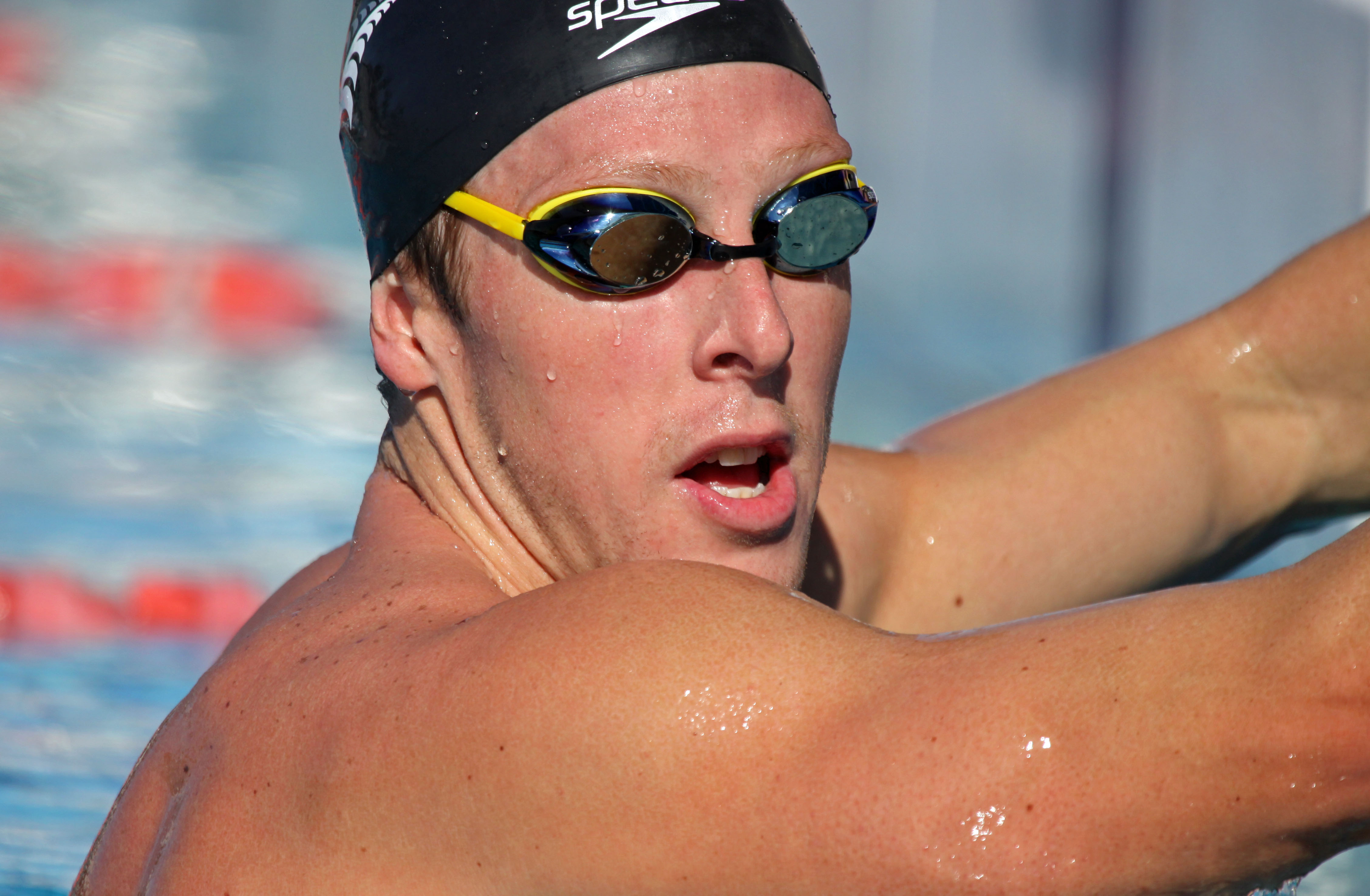
As a former high-performance athlete, Steve Kent knows first hand the sacrifices that need to be made if you want to reach the top of your chosen sport, or, as in his case, sports.
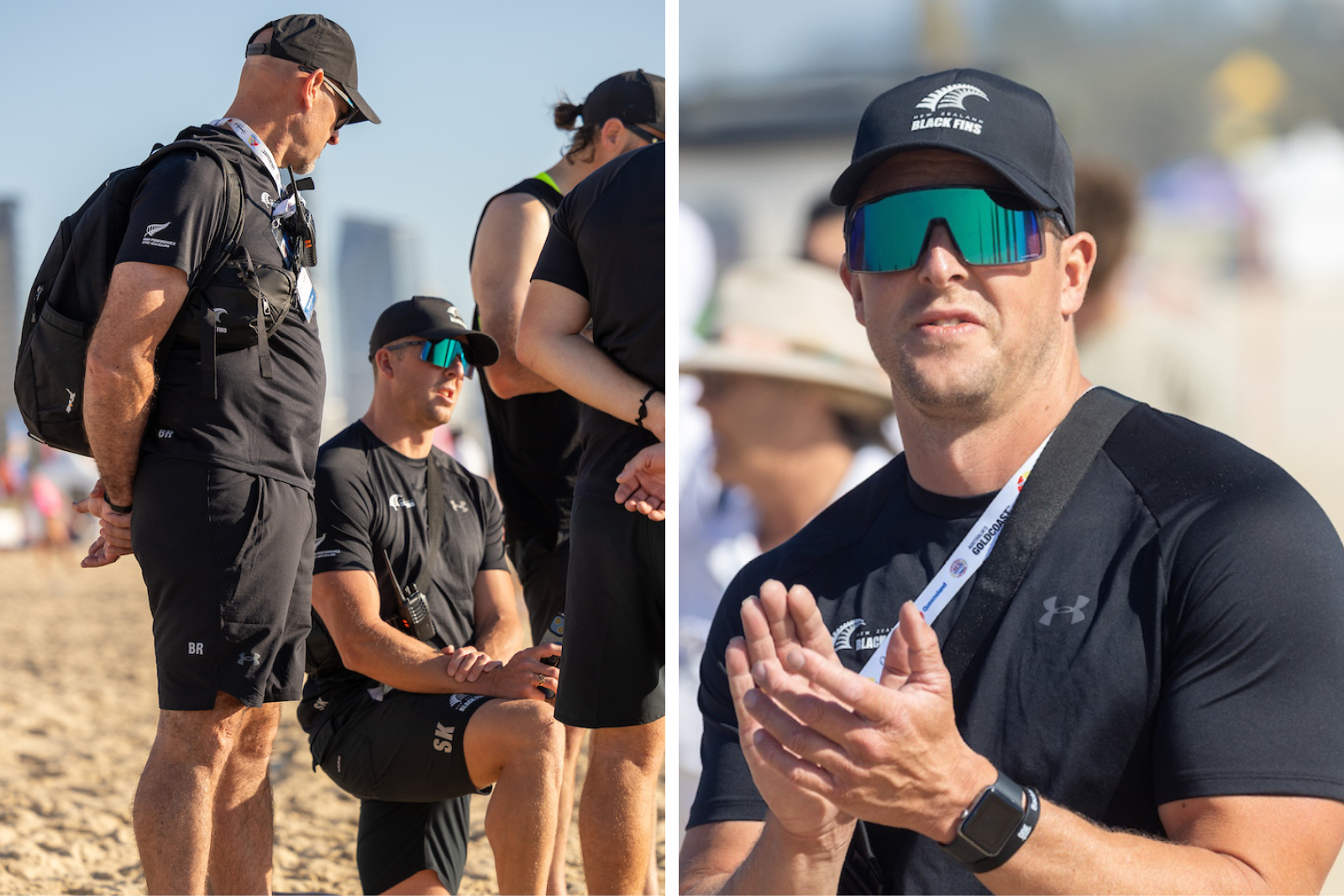
With his elite competition days behind him, it’s now about giving back for Kent, who is the Black Fins campaign lead as they head towards the 2026 Lifesaving World Championships in Morocco.
It’s a role he was first asked to take on in 2023, just a year after he competed in his final World Life Saving Championships as an athlete in Riccione, Italy, and he admits it wasn’t a straightforward decision.
“I had some reservations because I’d be assisting athletes that I’d just been on a team with but I felt I had enough knowledge and passion to give it a go, and take it as a big learning opportunity,” Kent says.
Kent’s first assignment was the 2024 World Championships on the Gold Coast. Like the Black Fins of 2022, they finished as runners up, but with a much less experienced squad than two years before.
“It was a lot closer than in 2022. It was a really positive shift in terms of getting back to a standard that we were really proud of. The way that we operated as a coaching staff, to lift those guys up to be close against a really strong Australian team was really amazing,” Kent says.
Growing up in Levin, Kent was surrounded by family members that inspired him. His mother and father were into swimming and surf lifesaving and it wasn’t long before he was most likely to be seen in the water, alongside his three older brothers, Dean, David and Andy.
Dean would go on to be a three-time Olympian in the swimming pool, representing New Zealand at the 2000, 2004 and 2008 Olympics in the individual medley and he would also wear the silver fern at the Commonwealth Games and World Championships. Steve was able to watch his older brother in person at the Athens games in 2004. It was a big moment for the youngest sibling, as he began to realise this was also the type of stage he wanted to compete on.
In 2008 when he was 19, Kent competed in his first World Life Saving Championships in Germany. Little did he know it was the start of a 14-year legacy as he would subsequently compete in that competition every two years (with the exception of a Covid affected 2020) up to and including 2022. This period included an unprecedented threepeat as the Black Fins, with Kent as a central figure, took home the titles in 2012, 2014 and 2016.
With Surf Life Saving absent from the Olympics, Kent knew that he would have to look elsewhere if he was to compete in London in 2012, so he moved to Auckland where he joined the high-performance swimming squad. He went on to qualify for the 4 x 200m freestyle relay at those games, which took place just four months before his first success at the World Life Saving Championships.
After the highs of 2012, 2013 proved to be a real struggle.
“I came back and just thought I was going to be able to do it whenever I wanted and I realised that wasn’t the case. I was a hard worker but I just didn’t realise that I needed to keep going to more levels just to maintain. It was a big learning year,” Kent says.
Kent pushed through and made the 2014 Commonwealth Games team where he competed in three relays; the 4 x 100m freestyle, 4 x 100m medley and 4 x 200m freestyle. But after that season, with just $300 in his bank account and no car, Kent looked at his life and before long he started his coaching journey, becoming a swim teacher at Northern Arena in Silverdale, Auckland.
Kent went on to join the fire brigade in 2019 and remains there as a full-time employee, clocking up 48 hours per week as a minimum over four shifts.
“It’s about team. Every day you’re working as a unit and you enjoy the comradery,” Kent says.
The campaign lead role can take up to 15-20 hours a week of his time and as a recently married man to wife Danita and a father to their daughter Carter, there is plenty of juggling to be done. But alongside the support of his family, he has others that guide and help him.
“I’m really lucky to have the support of Tanya [Hamilton] as High Performance manager in her space and the managers that we surround ourselves with to help us organise these trips and athletes. It’s not just me as a leader with a title, it’s one big family. The respect and enjoyment we get from each other for working hard is pretty cool,” Kent says.
“I love continually learning, that’s one of my things. As well as trying to make the athletes better, how do we make our coaches better and how do we challenge ourselves to put the programme in a better space. If I was to leave tomorrow, how do we give these people information who come in next, how do these guys do it, how do we learn from them and continue to grow.”
The aspiration of the sport is to be in the 2032 Olympics in Brisbane and whether Kent is still involved at that time or not, what’s important to him is that he leaves the structure in a better place whenever he does move on.
“it’s been mostly about giving back until next year, but at the same time I’m trying to help other build up to taking over these roles. We’re trying to develop a coaching staff and a system that just means we’re letting people learn.”
QUICK FIRE Q&A
Why did you get into coaching?
I got into coaching after enjoying my learn to swim teaching and also because I was so lucky to have great coaches all along my athlete path. I felt that once I started, because I was able to gain so much great knowledge from those who supported me that I should pass it on and give back to both the sports I enjoyed.
Who inspired/inspires you as a coach and why?
All of my previous coaches and the athletes and coaches I now get to work with. I’m very lucky in my position now with the calibre of support around me. Frank Tourelle, my Lower Hutt swim coach, as well as Scott Bartlett and Jason Pocock, my New Zealand team coaches, were huge for me.
What has been your biggest learning as a coach?
In my club coaching days it was to leave my personal life at the door and enjoy working with kids and enjoy their time working hard. Then the gains that are made together are even better. Since being in my high-performance coaching role, it’s to listen to all members of the teams I’m involved with, but ultimately sometimes trust myself as well and make the decisions that I feel need to be made.
What are you most proud of as a coach?
I am really proud of the resilience our New Zealand teams showed in the past two years. Things went wrong and decisions went against our strategy but to see them carry on and fight, it was great to be a part of that culture and lead it. I am loving the mana and pride our team is bringing to each other.
What is the biggest challenge you have had as a coach?
My biggest challenge was definitely moving from being an athlete and teammate with our current athletes, into leading them in the coaching role. Finding the balance and keeping honest and open communication lines wasn’t always easy. That’s something that will always keep challenging coaches.
How do you want to be remembered as a coach?
As someone who cared for the athletes, coaches and staff I worked and someone who enjoyed it. I always think back to a time in 2014 where the Black Fins got to sit in a room and hear from Steve Hansen. He talked about how the All Blacks want to leave the jersey in a better place than they found it. I try to take that same mentality to my high-performance coaching role as I am a caretaker of that role. I want to make it better not only for the athletes I have now but for the whole programme in the future.