Myka Nuku
Myka Nuku
- Coach Profile
For a long time, Myka Nuku and Peter Cowan were accustomed to putting their heads down and doing their own thing to drive Cowan’s performance in para waka ama.
Winning a Paralympic bronze medal changed that.
For the years leading into last year’s Paris Paralympic Games, Nuku (Ngāti Mahu, Ngāti Kahungunu) had a plan for Cowan’s competitions and training, making their own tweaks along the way with limited resources. Now, while their support has increased, so have the expectations, especially on the planning front. “We’re now doing our first attempt at a full four-year cycle,” Nuku says, noting their campaign is also the first of its kind for Waka Ama NZ. “This is all new ground for us, but the plan is by the end of next year, we’ve got all the tweaks sorted to qualify for the next Paralympics. Having a budget certainly helps!”
The structure of the support Cowan and Nuku receive now is contrasting to how Nuku ended up coaching Waka Ama. He came to the sport later in his life thanks to his wife, enjoying both the physical challenge and cultural aspects. At the time, the sport was in its revival stage. The pull of whānau and desire to learn te reo Māori took Nuku from Wellington back to Hawke’s Bay, with his experience setting him up with skills and knowledge to share. “I was sort of thrown into coaching,” he laughs. “I wasn’t sure if I was any good at it, but I wanted to help whoever I could.”
His coaching strengths led him to teaching, something he’d not considered. “I’m very dyslexic, and I thought you couldn’t give kids a teacher with dyslexia,” he says. “But they suggested PE, so I studied that and that’s when I really got into the idea of improving my coaching, through coaching school kids.” Taking up a role at a kura kaupapa, there weren’t enough students at the school for ’mainstream’ team sports, but Waka Ama was perfect. “For many of these kids, school wasn’t really their thing, but if I could help them be proud of what they achieved on the water, that was motivation for me.” He completed his Masters on the whānau relationships within coaching and is currently waiting for his PhD to be marked. He hasn’t let his dyslexia stop him from achieving academically.
His own competitive paddling career saw him attend multiple World Championships. He coached at the international level for the first time in 2010 while still competing himself. In 2016, partly due to an achillies rupture, he focused his efforts on coaching the first Waka Ama NZ Elite Men’s team. The team won the world title over Tahiti, considered the standard-bearer of the sport. “I learned plenty in this time” thanks to Brendon O`Neil of Vaaka who helped him along that journey.
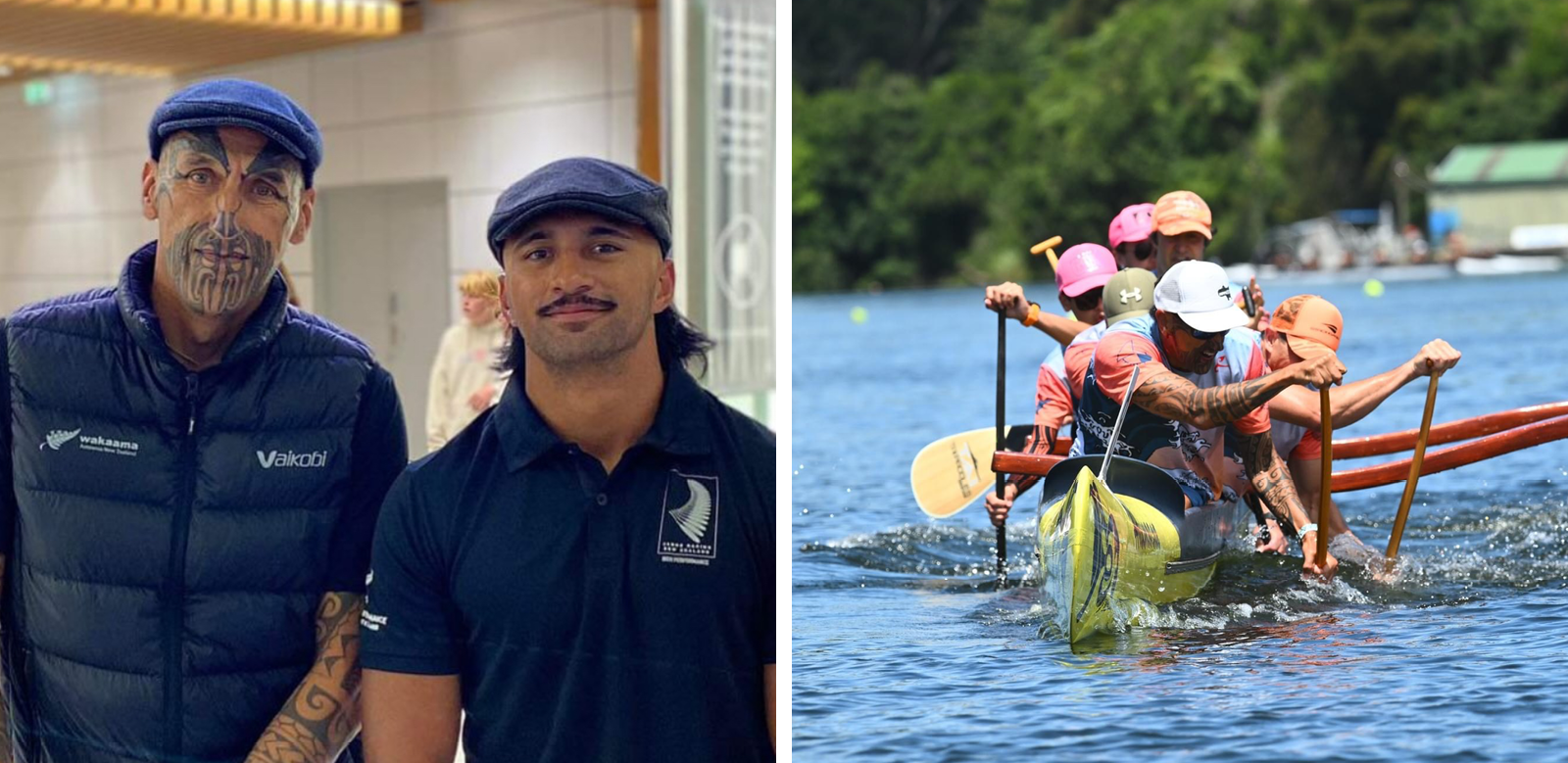
While he was teaching, he attended Waka Ama NZ Secondary School Nationals and was brought in to advocate for an athlete who needed an equipment variation. At 15, Peter Cowan (Ngāti Kahungunu, Hamoa) had lost his leg as the result of being hit by a car while out on his bike training for Iron Māori. Waka Ama was his first return to sport following the accident. “Peter had competed in the six-man, and also wanted to race in the singles, but he needed the outrigger on the opposite side,” Nuku says. “There are all these rules about that, and one of the race officials was saying no, so I was asked if I would go in to bat for him. We spoke to the race director, who was straight away willing to accommodate for what Peter needed for safety. That was the first time we met and chatted.”
Following some overseas travel, Cowan teamed up with Nuku to train together. “My wife is highly involved in para waka ama,” Nuku says. “One of our goals is to help the para scene, so coaching Peter was an easy sign-off from my wife.” Their ambitions started out as simply doing the best they could, developing Cowan’s paddling technique and fitness, and most of all, ensuring he enjoyed it. After working to get Cowan into ‘peak performance mode’, Waka Ama New Zealand backed him to race overseas. “Peter started doing okay, and we thought ‘What would happen if we really gave it a good nudge?’ Paul Smith of HPSNZ and Nathan Luce of Canoe Racing NZ gave us the support to have longer build ups before events, and that inspired our big push. “This is when we agree to go all in.”
The results continued to come in, and so did the support. ‘Team Peter’ grew to include a strength and conditioning coach, a physiotherapist, sports psychologist and a nutritionist. This enabled Nuku and Cowan to plan an 18-month campaign targeting Paralympic qualification. Despite a few challenges, Cowan medalled at the 2024 ICF World Champs, last chance qualifier, securing a place at the 2024 Paris Paralympics.
Ahead of the Games, the pair faced a decision which put their high-performance aspirations up against their cultural roots. “Waka Ama is situated in te ao Māori, and we bring high performance into that,” Nuku says about how he and Cowan embrace Māori culture within their campaign. “Everything we do, that’s the world we’re in. When we leave, we believe we’re on a cultural mission, with our whānau, hapū and iwi behind us. That motivates us, and it’s embedded in what we do.”
“I noticed that all Peter’s competitors paddled on one side,” Nuku tells. “We have our style here in Aotearoa, and we planned to stick to the traditional va’a/waka style, plus I didn’t want to coach something I didn’t know.” Changing sides at such a high cadence and speed risked errors and missed strokes, and it raised a conversation with HPSNZ’s Paul McApline. It was suggested that Cowan investigate changing from the traditional waka ama technique of paddling on both sides of the waka ama to just one side, they hesitated. “We wanted to stick with the Polynesian style, which was more about our identity and who we are, but we did try a race simulation with both styles just to see.” The results showed that Cowan’s speed was about the same, but with much less chance of error. “If he could match his speed on only one side, with limited training for that style, we thought there was potential to make some good gains.”
Nuku’s main concern was any criticism Cowan might receive at home for steering away from the traditional technique. “We spoke about it and agreed that ‘If our ancestors were only racing 200m, they would’ve only done it on one side if the day suited that’. It was a bit of a learning curve, needing to steer without changing sides, but we were given a new paddle designed for that kind of paddling. We needed to make sure it was the right decision for his performance.”
It certainly helped. At the Paralympics, Cowan secured bronze in the men’s 200m VL3 final. His final was one of the last events of the Games, meaning he and Nuku came into the village later than many of the New Zealand team, but they were still embraced as part of the whānau. “There was a whakatau for us, which was really cool,” Nuku remembers. “It was great for Peter to mingle with the other athletes, and I had the chance to connect with other coaches, hearing about their stories, what they deal with over four-year cycles. It reminded me that other athletes go through the same stuff as Peter, and other coaches have similar stresses that I do.”
As part of their new four-year plan, Cowan did not compete in this year’s World Cup, focusing instead on whānau kaupapa and putting on some muscle. He placed fourth at the recent ICF Canoe Sprint and Paracanoe World Championships in Milan, just 0.04 seconds off a podium finish. In drawing up the pathway for the next cycle, one thing has remained – the importance of whānau. “There’s a trust between Peter and I,” Nuku explained that they have a huge responsibility to one another, and one another’s whānau.
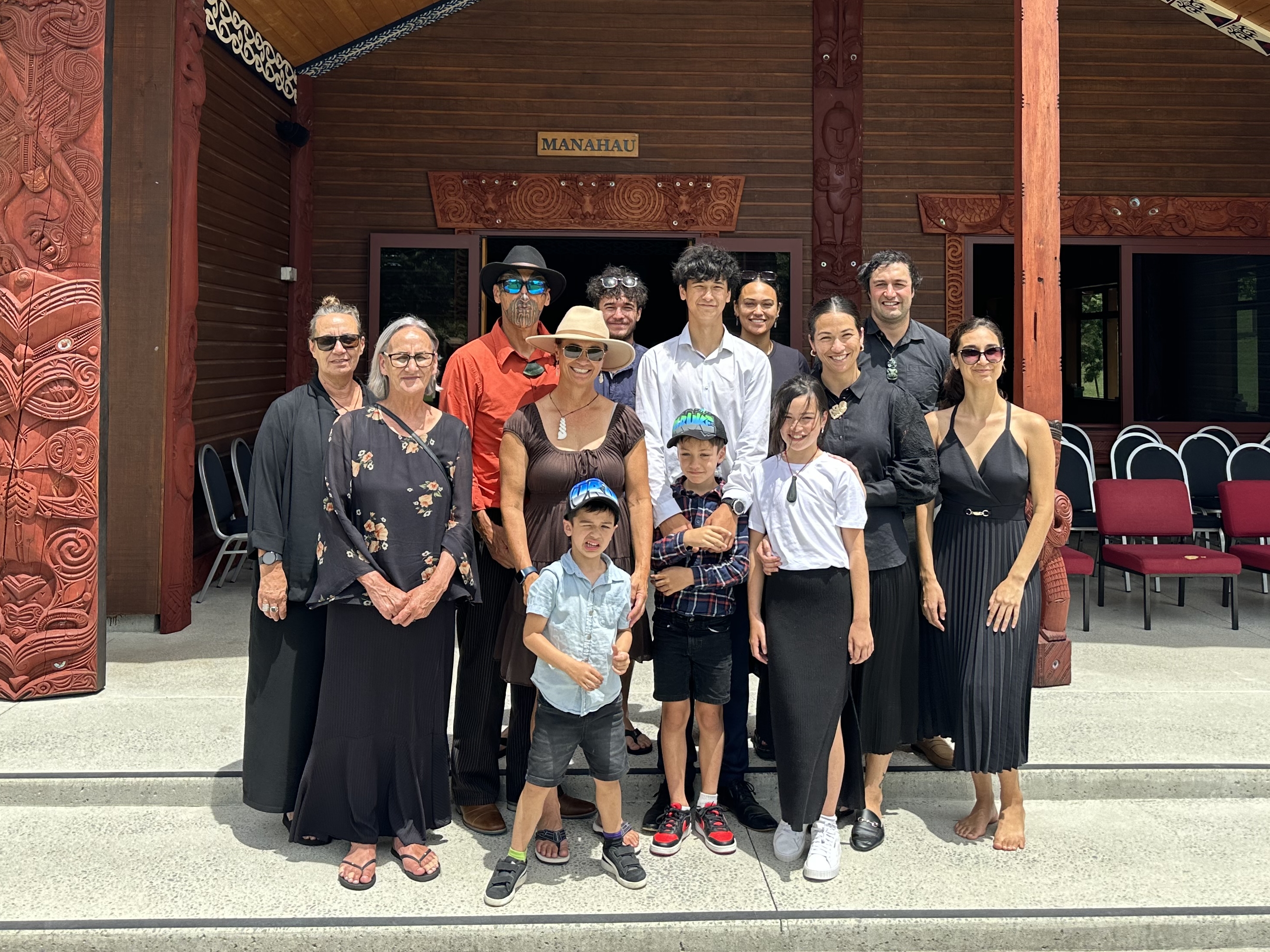
Nuku thinks integrating and prioritising whānau might just be the special sauce for their partnership. “His kids come along to our team meetings. They paddle with my grandkids, my daughter coaches. I often wonder about that, if all those connections help reinforce our campaign without us even touching it. It might be the magic we’re not even aware of.”
QUICK FIRE Q&A
What appealed to you about coaching?
It’s the look on someone’s face when they achieve something, and being part of the process that got them there. Even if that’s only a little part of their journey.
Who inspires you as a coach and why?
My wife and her koha vibe, sharing for the sake of sharing. There’s not many chances these days to share like this, coaching is a good way of doing it.
Biggest lesson as a coach?
There’s always room for improvement. And that your coaching relationship includes the athlete’s whānau and the coach’s whānau. Sometimes we just focus on the athlete, including their whānau, but we forget how our whānau add to this dynamic relationship. Having an athlete that respects their coach and the coach’s whānau is special.
Biggest challenge as a coach?
Communication. I’m constantly working on this. It’s one of the aspects I always rate as an important skill that I think I need to work on. I’m an introvert and dyslexic, so that doesn’t help.
How would you like to be remembered as a coach?
Respectful and caring. If I can try and remember to live up to that, that would be great.