Jason Koster
Jason Koster
- Coach Profile
Jason Koster was the classic Kiwi kid when he was growing up in Christchurch.
He played multiple sports, but when his brother took up judo, nine-year old Jason was reluctant to join him on the mat – until his father Rob stepped in.
“Dad said, ‘if I get on, will you get on?’” and so started a journey in the sport that’s lasted over thirty years and counting.
Around the same time, Koster was glued to the 1992 Summer Olympics in Barcelona. The iconic sight of the Olympic flame cauldron being lit by a flaming arrow, shot by Paralympic archer Antonio Rebollo, is one that inspired Koster to set a goal – he wanted to go to the Olympics one day.
As well as Barcelona, Koster has vivid memories of watching the 1994 Commonwealth Games in Victoria, Canada, and although Koster fell agonisingly short of qualifying for the 2012 and 2016 Olympics, missing out by one spot both times, he was a part of the New Zealand team at two Commonwealth Games, competing in the 100kg event in both Glasgow in 2014, where he won a bronze medal, as well as Birmingham in 2022.
Although it wasn’t love at first throw for Koster, the other sports started to fall away for the teenager, while judo was starting to stick. After high school, he moved to Hamilton for four years at the turn of the century, studying Sport and Exercise Science at the Waikato Institute of Technology and joining the New Zealand Judo Academy that had been started by Fiona Iredale (2000 Olympian).
But as his sporting journey continued, Koster was discovering that unlike more mainstream sports, the depth of coaching stocks wasn’t readily available in judo. After returning to Christchurch in 2005, Jason found himself without a coach that could take him to the next level.
“I was quite unique because there was no-one coaching me, so after I returned to Christchurch in 2005 up until I retired in 2022, I was always self-coached,” Koster says.
“Dad was always there and a few people would come along and advise me but from that early point I was always coaching, and when I finished up in 2022, it was a natural progression to keep coaching as I was doing it anyway.”
Upon returning to Christchurch, Koster set himself the task of rebuilding the Canterbury Judo scene, but his work has also been spread much wider, with time as head coach for Judo New Zealand, as well as serving on their board.
Koster and his wife Moira opened their own club, Premiere Equipe Judo, in the Christchurch suburb of Bromley in 2018. Koster is the head coach, and Moira is still actively competing. Moira is herself an elite judoka, with a record breaking career that includes a silver medal at the 2014 Commonwealth Games, bronze in 2022 and appearances at the 2012 and 2024 Olympic Games. And a historic year in 2022 where she won 8 medals on the IJF tour, a feat never seen before by a New Zealand athletes.
“I did as much as I could as an athlete with the limited resources I had and now my big passion and desire is to navigate and guide these kids who have far more talent and potential than I ever had. My goal is to make coaching a fulltime, employed role but until that time I am treating it as such and I spend as much time as I can perfecting the craft,” Koster says.
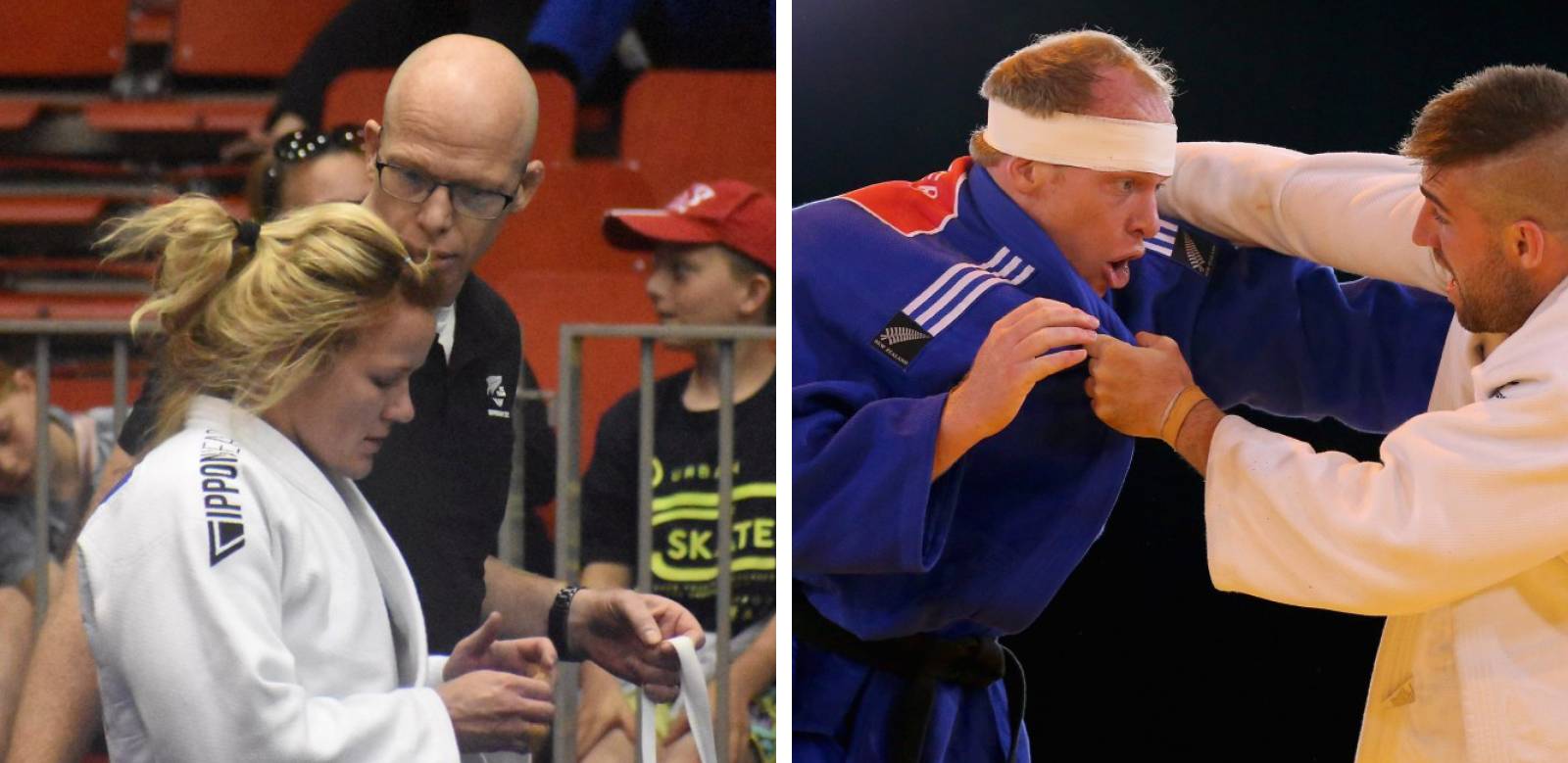
Earlier this year, Koster completed his International Coaching Enrichment Certificate Programme (ICECP). ICECP is a 12-month intensive education course delivered through both online and in-person components. Run by the United States Olympic and Paralympic Committee (USOPC) in partnership with the University of Delaware, the programme brings together over 30 coaches from around the world to develop expertise in sports science and coaching.
The primary objective of the course was to design and implement a meaningful and sustainable coaching initiative in the coach’s home country. Koster’s project was based on Premiere Equipe and titled ‘Development of a High-Performance Programme within a Community Based Setting.’
“A core theme of the project was to ‘create judo heroes.’ With the growing profile of our programme, we’re making strides toward this goal and now athletes are actively moving from across the country to Christchurch to train with us. Over the next 12 months, I’ll focus on expanding our program and establishing a junior development academy,” says Koster.
At the start of May, Koster visited the IOC to present his project, and also received his ICECP Diploma from the then president of the IOC, Thomas Bach.
“The project has meant so much to me and I couldn’t have done it without the support of my family and the trust of the athletes in my team.”
Although Koster didn’t quite achieve his Olympic goal on the mat, his career in judo has brought him full circle to the IOC and now it’s full steam ahead as he looks to help the next generation achieve their goals and ambitions, but most importantly, provide the level of care and understanding that will help them do that.
“Being someone that an athlete can trust and know that I’ve got their best interests at heart, that’s important. I want them to know and to really understand it’s them I care about, not their results.”
COACHES KŌRERO QUICK FIRE
Why did you get into coaching?
I was actually pushed into the role to start with, as the Tokoroa Judo club needed a coach and I got real joy from it so it quickly became a passion.
Who inspired/inspires you as a coach and why?
I take lots of inspiration from lots of places. I think my parents have always been a big inspiration for me. Watching them studying and learning and having a thirst for knowledge has helped me not just accept things for what they are.
What has been your biggest learning as a coach?
“Challenge the comforted and comfort the challenged”. It’s important to treat every athlete as an individual and really get an understanding of who they are and where the are in their life and using that to create a sense of belonging in the team so they have a strong self identity that will travel beyond their career in the sport
What are you most proud of as a coach?
Moiras run in 2022 was historic. She had a lot of doubters back home, especially coming back after pregnancy, so to see her do what we knew she was capable of will always be special and 2022 as a whole with 4 athletes and myself qualifying for the Commonwealth Games has become the benchmark we aim to exceed next year. With that said, I get so much pride from seeing the development and growth of our Juniors. See 4 and 5 year olds running into the club with huge smiles on their face, it doesn’t get much better!
What is the biggest challenge you have had as a coach?
There’s a lot of people who don’t necessarily see your vision. I’m quite ambitious with my goals and I think when you’re trying to do things that have never been done before, it’s important to trust and believe in the work that you’re doing and ensure you are aligned with those that see the vision
How do you want to be remembered as a coach?
A friend of mine said the way to define if you were a good coach is ‘if you turned up at an ex-athlete’s wedding uninvited, would you be welcome?’. When he said that to me, I thought to myself, that’s what really matters. The coaches that genuinely cared about me as a person when I was growing up, are the coaches I have connections with now. I have learnt I won’t make everyone happy but I can always show them I care and that is a value I place a premium on.