Tess Mattern
Tess Mattern
- Coach Profile
Tess Mattern grew up as a swimmer in Northern California, starting racing at just four years old. But following her own path has led her to becoming one of the top triathlon coaches in the South Island.
With two older sisters who swam, Mattern grew up at the pool, and swam throughout uni, teaching kids to swim when she was still young herself.
“My club coach as a kid was really a big proponent of teaching, and allowing us the opportunity to teach other people,” Mattern says of her coaching beginnings.
After graduating university with a sociology degree, Mattern wasn’t sure what direction she wanted her career path to go, so returned to her childhood swim club.
“My old club coach was still the head coach then, so that was really fun and full circle to come back and coach with him, alongside him,” she says.
“He was really supportive of developing me as a coach, and was always pointing out my strengths. He was really hands-on when I wanted him to be, he would offer support and advice and collaborate but also was hands-off, that was also important, to let me grow too.
“So it was a really lovely relationship to start my coaching journey.”
Mattern then studied to become a personal trainer, and decided she wanted a nutrition degree to complement her existing knowledge, and help her personal training clients.
Moving to Colorado with her partner to study, she was approached by the Colorado State University triathlon team, who were looking for a swim coach.
Having done some triathlon casually to keep fit, Mattern was keen to be involved in all aspects of coaching the sport, and not just swimming.
“I took on the role as swim coach for Colorado State and I was working with a head coach who had been doing triathlon coaching for a long time,” Mattern says.
“I got really lucky because he was somebody who really believed in me, supported me, and was really encouraging of me to develop my skills across all three sports. He was like ‘it’s great that you’re taking on our swim programme but also let’s get you certified as a triathlon coach so you can help with all the sessions’.”
Coaching both casual athletes and those who wanted to go professional, Mattern learned a lot from the experience. It was a strong programme, with athletes consistently making the top five in the nation.
Having her background with nutrition and personal training meant that Mattern was able to provide her athletes with personalised strength programmes, something a lot of triathlon coaches didn’t focus on.
“That was really important to me, and it was something that I always pushed to athletes,” she explains.
“It was nice to have that background to be able to say I can actually write you a strength programme which is appropriate to you as an endurance athlete and that will support your endurance training.”
Mattern thought she might be a full-time nutritionist, but she fell in love with triathlon coaching, and uses her education alongside her coaching skills.
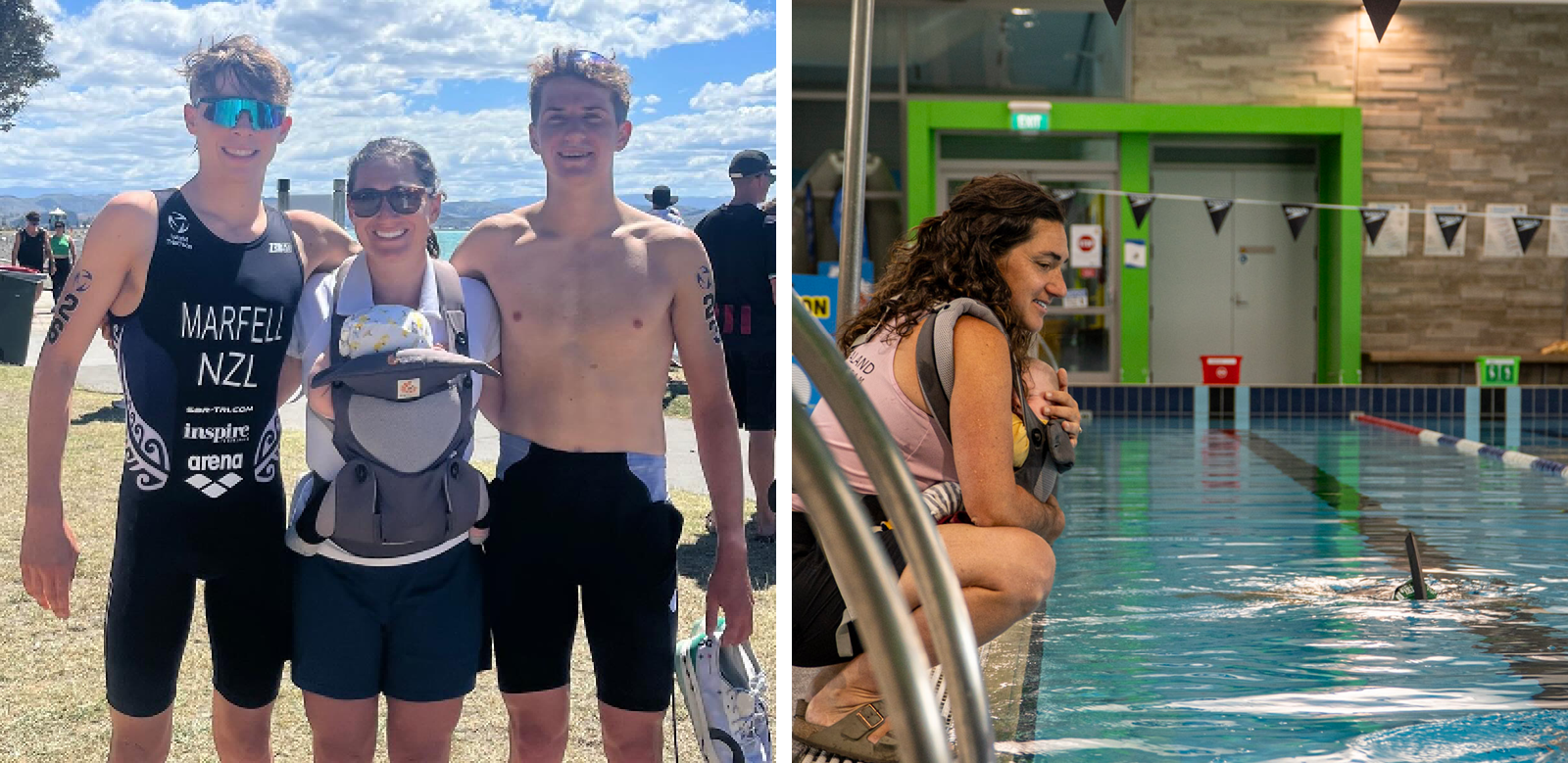
In 2018, Mattern and her husband Tucker moved to New Zealand, Tucker studying winemaking at Lincoln University and the couple settling in Christchurch. Tess started working at the Canterbury Tri Club in 2019, coaching their academy, with kids aged from 14-18.
“At first I was quite unsure about working with that age group, because it was a lot younger than the university age, but I really fell in love with them,” she says.
“They were playful but super coachable, really engaged and just a lot of fun to be around, and in my opinion, very mature. They had good social skills and emotional intelligence and really surprised me.”
When lockdown hit, the couple moved to Otago for Tucker’s internship in Gibbston. After a time spent working with him at Chard Farm (a vineyard), Tess was even more convinced that coaching was the right path for her.
“I ended up working part-time in the lab, which I hated honestly, it was not for me and it was very validating that I was in the right career,” she laughs.
With lockdown restricting coaching to virtual sessions, Mattern stepped into the role of programme director of the academy, mostly working remotely but travelling up to Christchurch as often as she could. She stayed in that role for five years, only recently stepping away.
“Over that time, I ran a bunch of South Island junior camps, which was something that hadn’t really happened before,” Mattern says, with most camps and races taking place in the North Island.
Mattern had her first son, Hugo, in May of 2022, but complications at birth meant he only lived for one week.
“It’s been an ongoing grieving process, but the first year was really intense,” says Mattern of the tragic loss. With her second son, Kai, just turning one year old in November, Mattern has had to shift her focus over the past few years, to look after herself and her family.
“Going through my experience of losing my son really shook my confidence, because I was very trusting of the birthing process, and then I thought it went well but it didn’t,” she says.
“And to come home without a baby after an experience that I had been fully trusting of really shook my confidence because I was like how did I not know that something was wrong, and that really bled over into all aspects of my life, including my coaching.”
Mattern was initially introduced to the Te Hāpaitanga programme in 2022, but wasn’t in the right mental space to consider joining the women’s coaching mentorship.
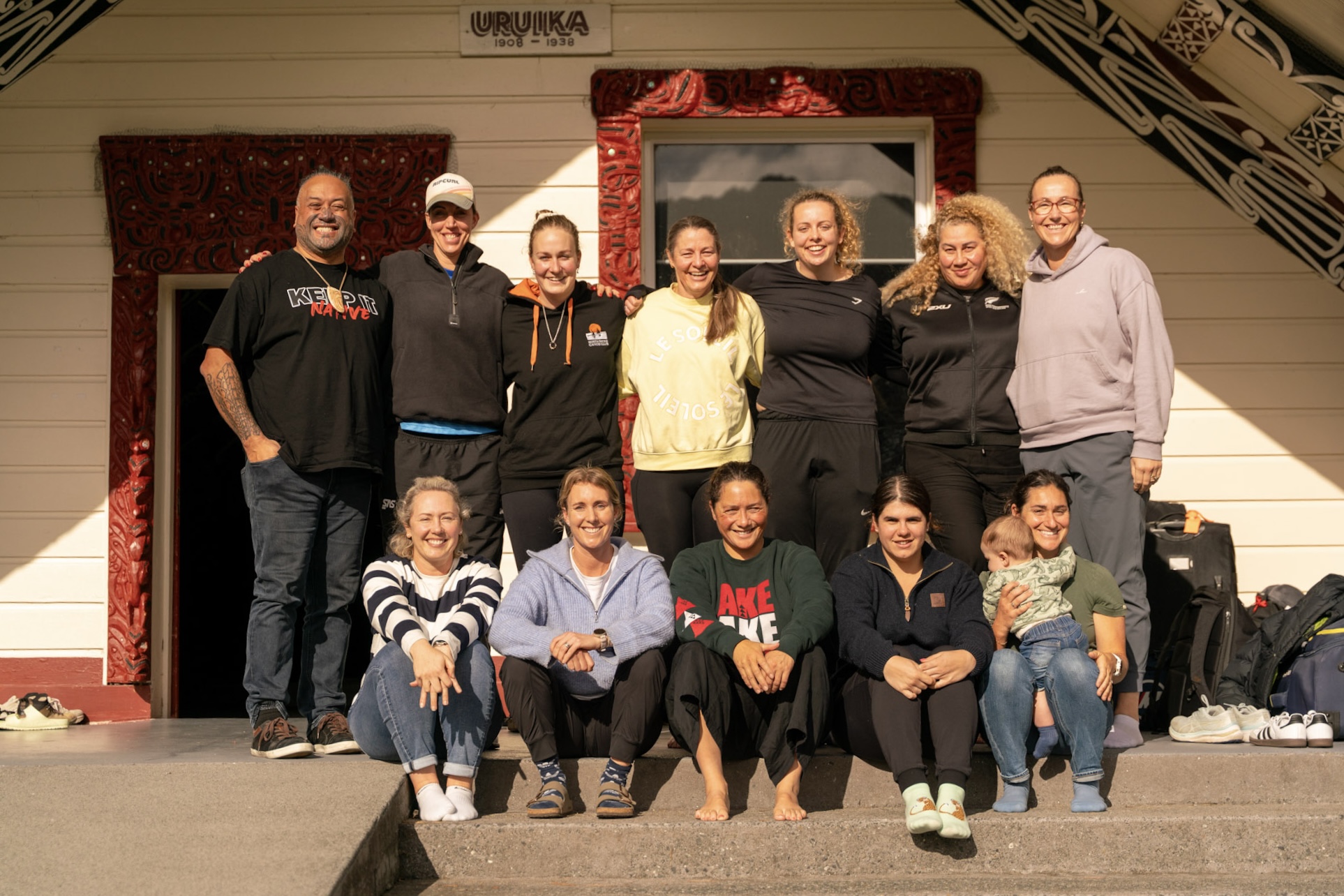
She applied for the 2024/25 cohort, and was accepted, alongside nine other participants across various sports.
“It was honestly the thing that I needed at that point in my life to give me some confidence back,” Mattern says of Te Hāpaitanga.
“Being accepted into the programme and being part of a group of super supportive women, was just essential and life-changing for me, to be lifted up in both a personal and professional way.”
She found out she was pregnant right before the first residential, and the group supported her all the way.
“All through my pregnancy, they were super accommodating in terms of making sure I was comfortable at residentials, and being really flexible about what I participated in,” Mattern says.
They also taught her to start looking after herself, especially programme lead Jody Cameron.
“That sounds really basic, but I think especially women, we don’t do the best job at that, we’re always putting other people first. Jody especially was always like ‘go have a nap, you’re okay, you’re growing a human, it’s okay if you miss this one session, we’ll fill you back in on it and you’ll be better focused when you come back’,” Mattern recalls.
“That was something I never would have considered doing, is taking a moment out for myself.”
Once Mattern had her baby, Cameron was incredibly accommodating, offering to fly family to residentials and ensuring comfortable accommodation for the family.
“It just showed me how when people decide it’s worth it to support a woman who has children in a space, it can happen really easily,” Mattern says.
“It doesn’t have to be one or the other, and through having that support and then also having the financial support, I’ve been able to do quite a lot with my son throughout the last year.”
Mattern is figuring out how to balance coaching with being a full-time mum, and coaching in the high performance space as well as the development space.
“It is still my goal to be heavily involved with the junior side of things because I love it and I want to start something down here, because there’s nothing in Queenstown really for juniors, but I just have to figure out the right timing for myself, and where I find the right time to do it,” she says.
Mattern’s ultimate dream is to go to an Olympic Games as a coach, and see her athletes on the global scale, and she’s grateful to New Zealand for giving her the pathway.
“It has been a really unique opportunity to be working in triathlon in New Zealand, because obviously New Zealand is a small country, but triathlon is a small sport,” Mattern says, having the connections to high performance sport.
“I’m doing everything that I can to take advantage of that and help Triathlon New Zealand in any way that I can, but also develop myself in all the ways that I can.
“I’m thankful for being in this place right now, and having people who have supported me and continue to support me in my professional development and I’m excited to see where I can take this and hopefully live out a dream of going to an Olympics.”