Aaron Osborne
Aaron Osborne
- Coach Profile
Teaching and coaching were never on Aaron Osborne’s radar, but to his surprise, he followed two influential people in his life and ended up doing both.
His mother was a teacher and despite his early reluctance to follow her into the profession, he would go on to teach at Western Heights High School in Rotorua in the late 2000’s.
Ian Mercer, Osborne’s canoe slalom coach, tapped him on the shoulder and started a coaching journey that’s now almost 20 years old and has taken him to the top of the sport.
“I grew up never wanting to be a teacher or a coach, but Ian asked me if I could help and I just started doing it and I found out that I liked helping people. So, I started coaching from a young age and then I went to university and studied sports science. I wanted to learn how to be a better athlete,” Osborne says.
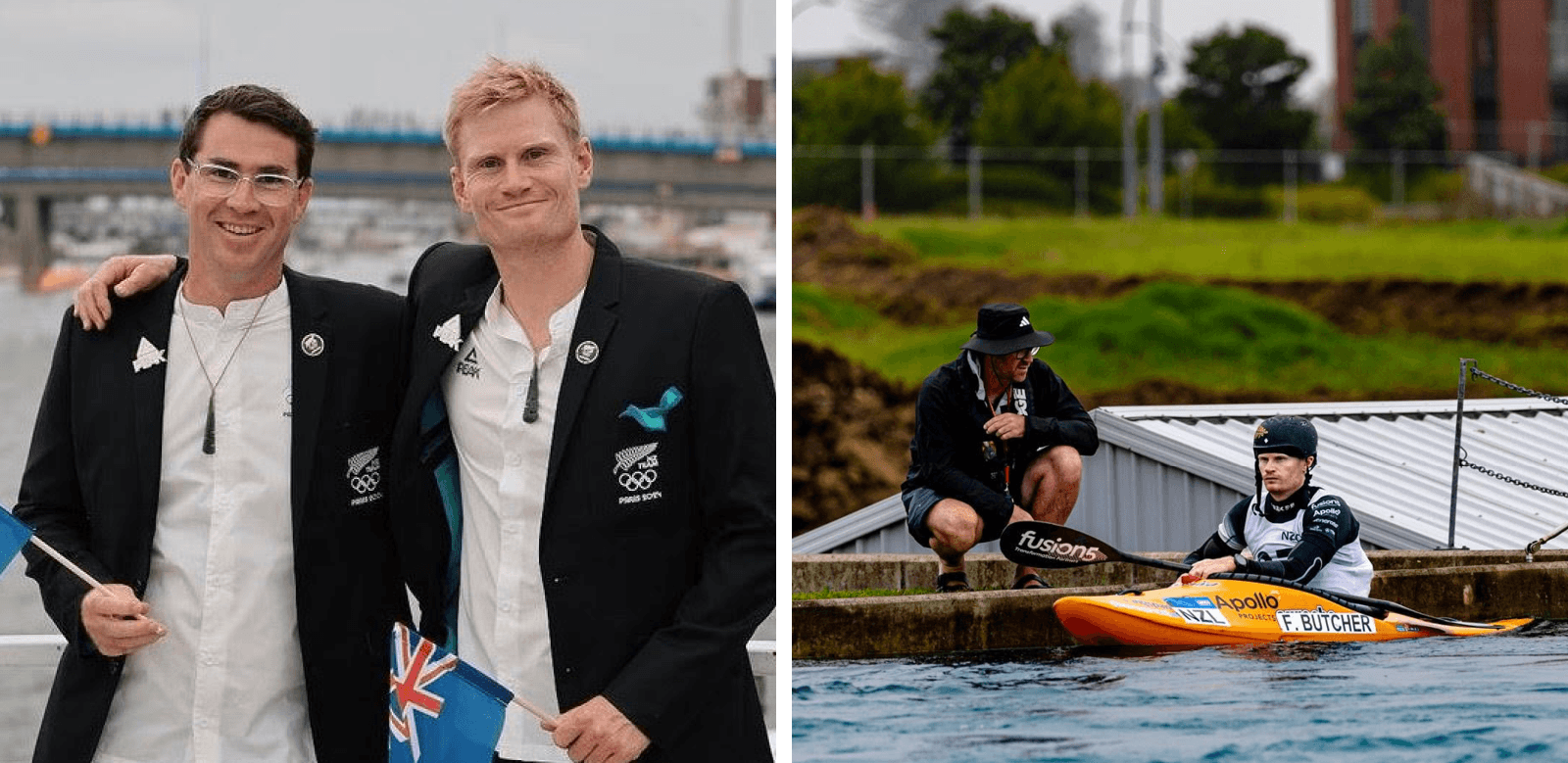
Born and raised in Hawke’s Bay, Osborne developed an interest in kayaking at school and would regularly head up the Napier/Taupo road to the Mokhaka river.
With hard work, learning, and help from those around him, Osborne became New Zealand number one, taking his talents around the world and representing his country with pride and distinction. He missed out on qualification for the 2012 Olympics but got the opportunity to travel to London as a coach, assisting Kiwi born Ella Nicholas, who was competing for the Cook Islands.
After those games, Osborne reflected and couldn’t see himself getting better in the four years leading into Rio, so decided to leave his own kayaking career in the past. But coaching and being involved in the sport he loves, has continued ever since.
In 2012, Osborne joined Canoe Slalom New Zealand as the organisation’s first paid employee. His time as head coach between 2013 and 2018 saw him perform the team leader role in Rio, where Luuka Jones took home the silver medal in the K1.
In 2017 he became CSNZ’s high performance manager, before departing for the role of performance development manager with Canoe Racing New Zealand in 2019.
“Learning your way through not just coaching but managing systems and building whitewater courses and things like that is all part of it. You’ve got to be more entrepreneurial than in other sports and I enjoy those sorts of challenges.”
In 2022, Osborne took on a project manager role at CRNZ, and since then he’s worked on a number of important matters to help the sport, including the development of paddling and coaching programmes and a disability inclusion project. But then in 2023, Finn Butcher, someone he’d first met many years before, came knocking on his door. They had a few coffee catch-ups, and then Butcher asked the big question – with the Olympics approaching the following year, would Osborne come on board and coach him?
“I was pretty apprehensive to come back to coaching him to be fair, because it’s not a job that you do for money, and it’s not a job you pick up and put down. You have to commit and if I’m going to do a job, I’m going to do it well,” Osborne says.
Osborne agreed to help Butcher qualify for Paris and then once he qualified, Butcher asked him to stay on and go all the way to the games.
“I’m proud of signing on and backing ourselves a little bit, without thinking, we had little money and resource. We got on with it and worked out how to do the things we needed to do.”
“I’m an optimist. I think anyone can win a medal if they’re capable. It’s the work and determination that puts you in a position to win a medal. But the medal thing isn’t something we spoke about as it’s a given. I’m only going to commit my time if he’s fully committed to trying to be the best that he can be.”
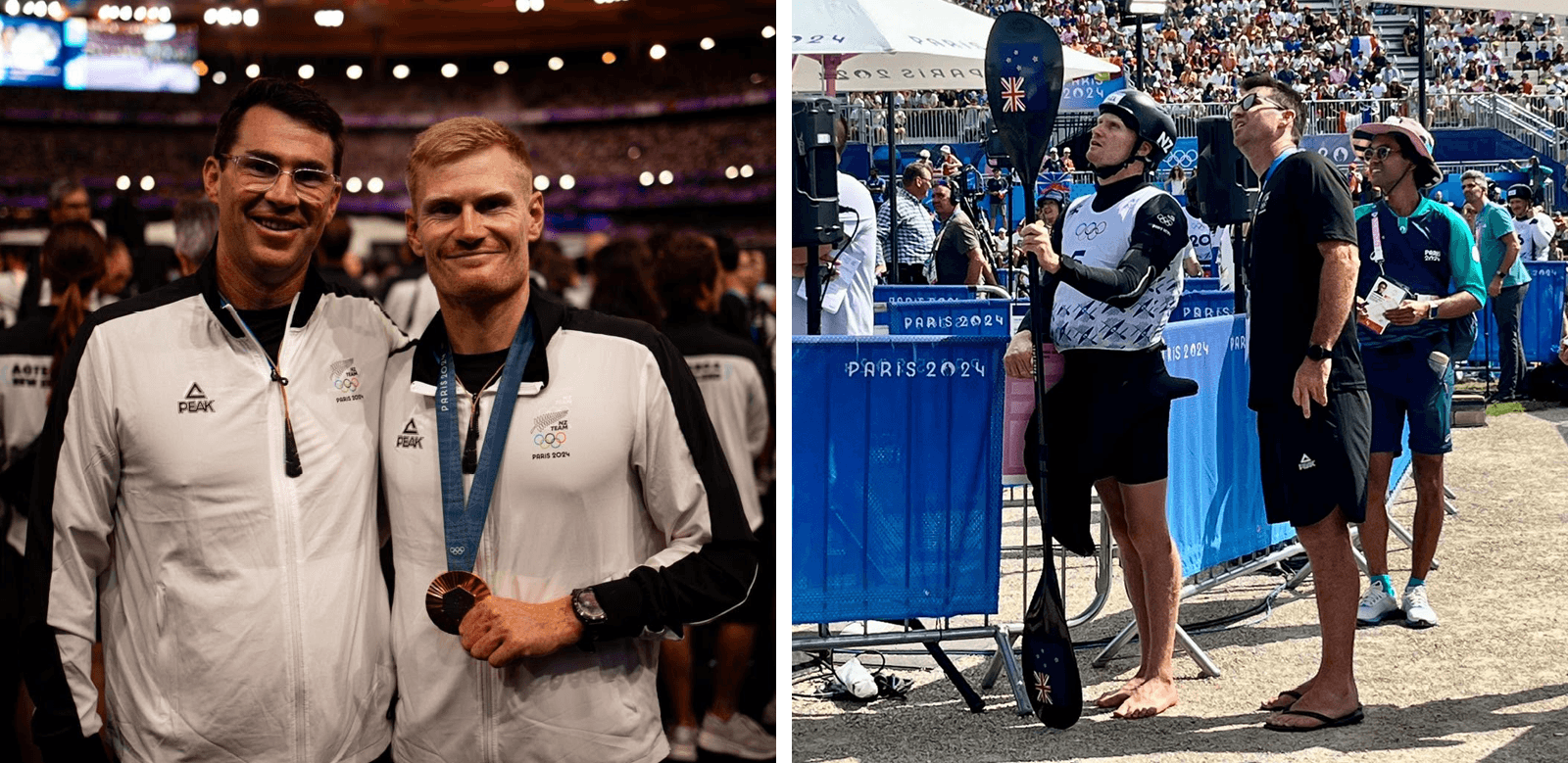
Butcher became the inaugural Olympic champion in kayak cross in 2024 and since then, Osborne has signed on to coach him until the Los Angeles games in 2028. But they are both conscious that the chasing pack will make back-to-back golds a difficult assignment.
“Sport’s a hard business and people are all getting better and there’s a lot of people trying to do the same thing,” Osborne says.
Osborne now combines his part-time project manager role with coaching the Olympic champion. It’s an arrangement he’s able to juggle, despite being overseas with Butcher for approximately five months every year.
“If it was just the same thing every day, I think I’d be very bored. When I stopped coaching and came back, I had a very different perspective on what coaching is, and I think every time you finish a campaign and reflect you have an opportunity to learn in those times.”
“I love being around rivers and the challenge of it. This sport is one where your physical attributes are very important but equally, you get one chance on a course where you’ve never paddled before and so you’re constantly learning. You never do the same thing twice, so you’ve got to keep evolving and learning. Nothing’s ever complete, so it’s somewhat frustrating for some people but it’s exciting at the same time because you’ve never mastered it.”
Q&A with Aaron
Why did you get into coaching?
The first reason was that my coach Ian Mercer, who I respected, asked me to help him and then I started enjoying it, and I learnt that I enjoy helping people.
Who inspired/inspires you as a coach and why?
There’s no particular person but I’m constantly, pleasantly surprised at what we’re capable of and as a coach it’s important to stay open minded about what’s possible.
What has been your biggest learning as a coach?
Something I learnt at university was that trying to keep everything as simple as possible. Understand the context you’re in, understand the sport and the demands, understand the person. Start, and try get better at what you’re doing.
What are you most proud of as a coach?
How much the sport has been able to achieve. Also, when you zoom way out, Finn is from Alexandra with the Clutha River which is essentially flatwater, I’m from Hawke’s Bay with no river and it’s weird that we’re quite good at a sport that’s heavily European-based, and the likelihood of being able to win a gold medal is extremely small.
What is the biggest challenge you have had as a coach?
Coaching as a whole is a joy but it is challenging. We spend a significant time away from New Zealand and I don’t think people understand how hard it is for both the athlete and the coach. In the Olympic year we were out of New Zealand for about 160 days, so it’s difficult being transient.
How do you want to be remembered as a coach?
I think if you’re remembering me, you’re remembering the wrong thing. I don’t like the limelight, I’d rather just get stuff done and help the people that want help.