Amber Clyde
Amber Clyde
- Coach Profile
When an adult Amber Clyde saw a young girl alone and nervous at the skate park, she saw her younger self.
Clyde had given up skateboarding as a teenager, after feeling very anxious at the skate park as the only girl, but took up the sport again after giving birth to her first child.
“I never saw one girl until I was 20, so the whole time I was a kid, I kept trying to show up and kept trying to go, but it was just all young boys and men, and I was just like ‘nope’,” says Clyde.
Now Clyde runs Girls Skate NZ, an Auckland-based skate school based on breaking barriers and making skateboarding accessible for a range of girls and women.
Clyde was inspired to start the school when she saw a 12-year-old girl standing alone in a corner at her local skate park.
“It just reminded me of a little me and I was like I can’t just sit here and watch her be here and not skate, and I asked her if she wanted to skate with me, and she did,” she recalls.
“I taught her some things that I knew and I had so much fun, I said to her, ‘Do you want to come back, I’ll skate with you next week if you want?’. She did and she bought her friends and within a few weeks, there were three of them, and I thought ‘This is something’ and it grew very organically from there.”
This was around seven years ago, that young girl now 19. Across that time, the school has grown to include over 7000 members on their database – from the age of three into women in their 30s.
“Never in my wildest dreams would I have thought that I’d be running a skateboarding school for girls,” Clyde says.
“It still blows my mind when I show up to a class and there’s like 30 girls there and I think this is crazy that this is even a thing that I never would have thought it could have been.”
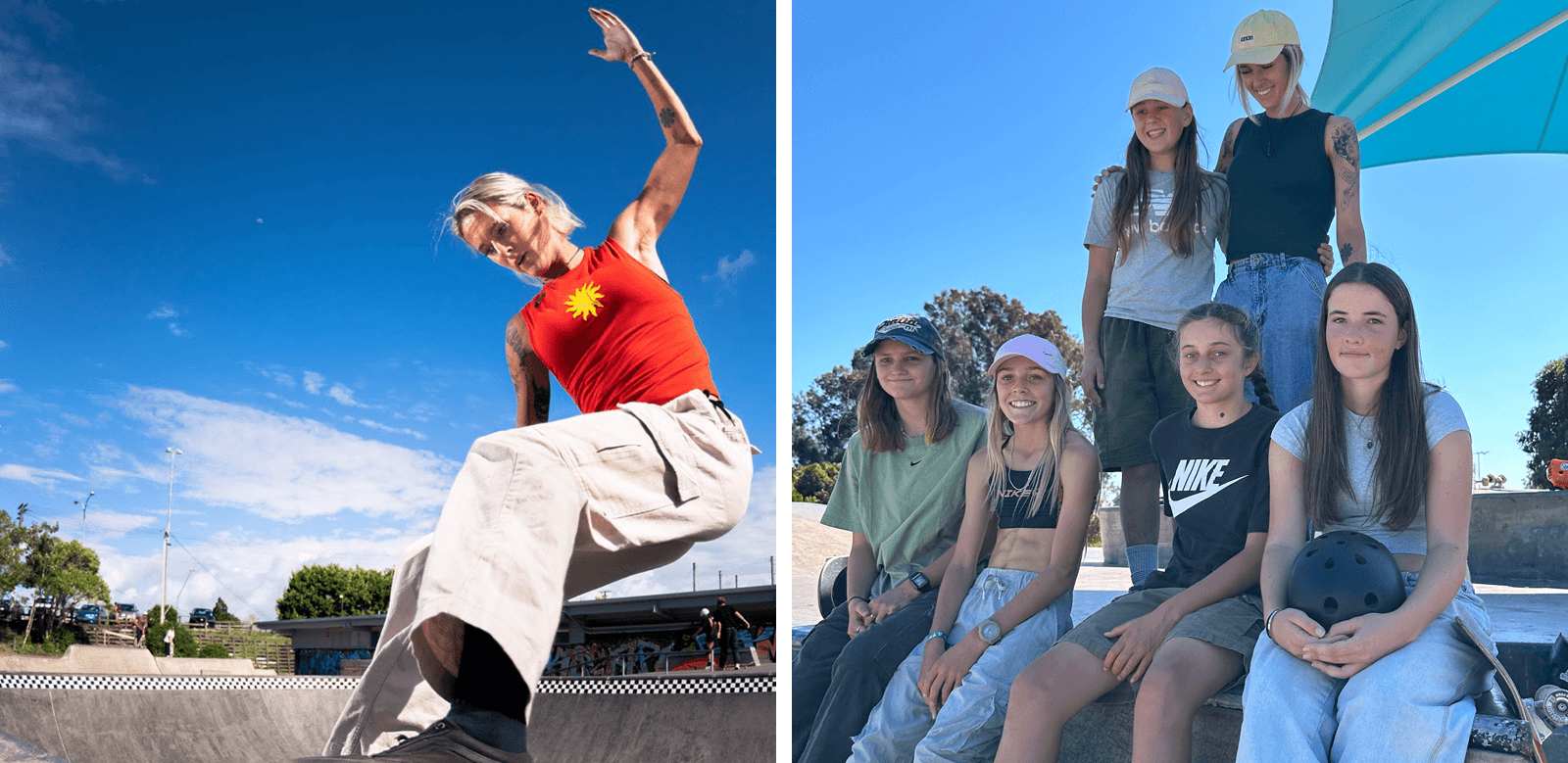
The transition from a casual, by chance meeting to a full business was something Clyde never envisioned, simply hoping to encourage one girl to be more brave.
“Girls Skate NZ started very organically, just by seeing another girl at the skate park. After a few weeks of skating with her, and her bringing her friends, I just saw the progression, not only in skill, but even the increase in her confidence, and I was just like oh wow, this is something that’s definitely very needed in this space,” she says.
It progressed to Clyde teaching at a skate park closer to them after school, and more girls kept bringing friends.
“Before I knew it, I had two to three classes a week, all volunteer, and just coaching them and teaching them what I knew. It just grew like that,” she says.
Clyde also has started a part-time job working in youth mental health, and she says both jobs complement each other well, with a huge range of people coming to skateboarding.
“The thing with skateboarding is that it attracts a lot of neurodiverse people as well, so to have a space which is welcoming and warm is vital to making them stay engaged with it,” she says, with tomboys skating alongside girls in pink tutus with their nails done.
Clyde is now a mum of three, who was inspired to get back into the sport to do something for herself, but also with thoughts of her daughter.
“I had a little girl when I first started and that was a big thing for me, I would hate for her to ever feel too anxious to be in that space,” she says.
“In regards to any sport, if she felt unwelcome and she didn’t want to do the thing that she loved, that would really upset me and it really does motivate me to provide that space for other little girls as well.”
Being a member of the Skateboarding NZ board means that Clyde can focus on both the high performance aspect of the sport, but also the community level.
“I want to be a voice for the girls, that was my incentive of being on the board when I first started, there was hardly any other women. Now it’s actually predominantly women now, so it’s changed a lot,” Clyde says of the board members.
“So now it’s gone from being a voice for the girls, to very community focused, because obviously when there’s a national body, it can get very focused on high performance, cause that’s how they get a lot of funding, is through high performance, so I try to bring it back into grassroots and community.”
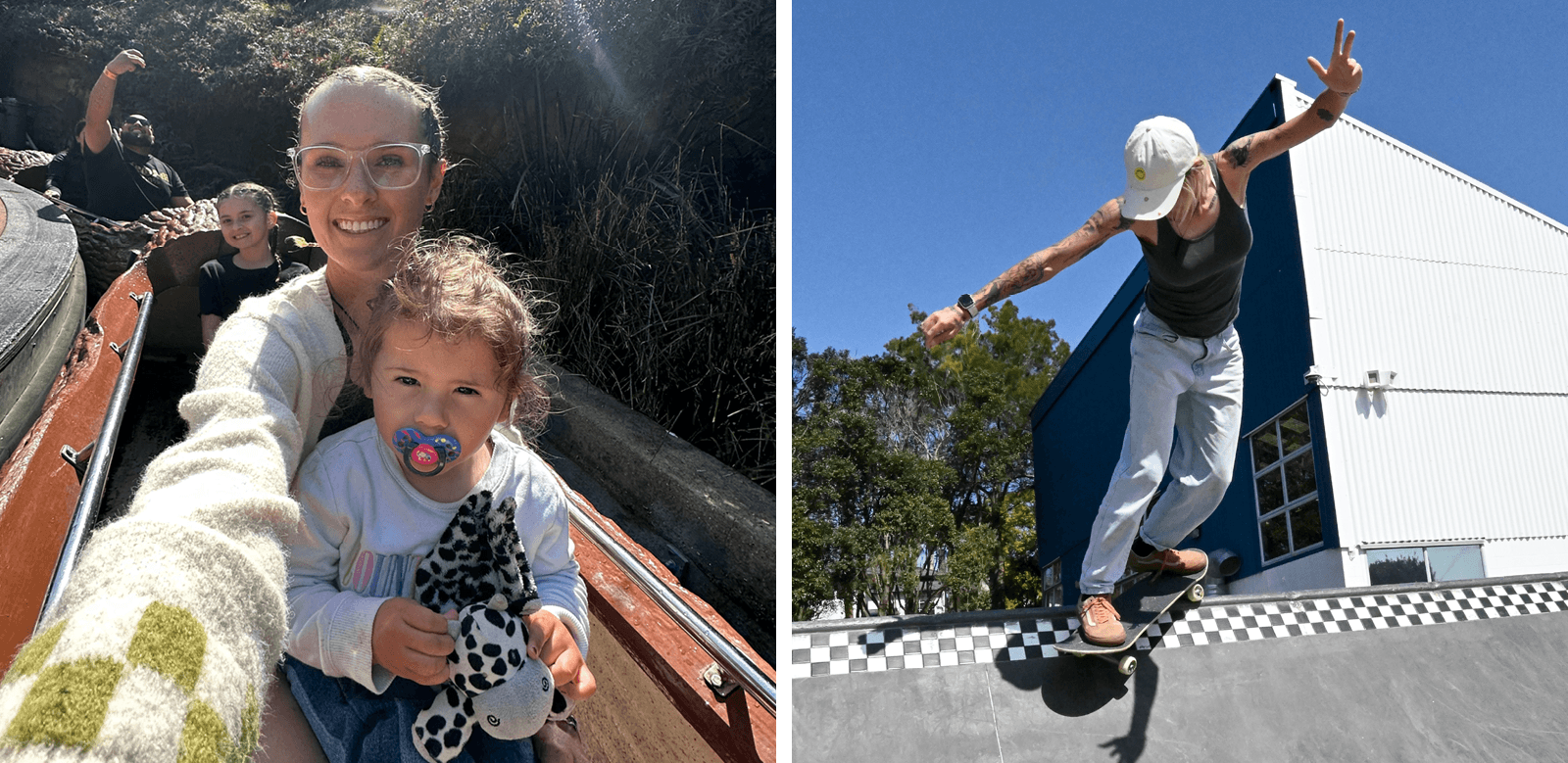
Clyde does some high performance coaching, mostly in the development space, and while mentoring those athletes with high aspirations is absolutely a highlight for her, it’s the little moments too.
“Watching these girls come and they show up to the park and they don’t say a word to me, they don’t say a word to anyone and they’re really shy and you can tell there’s maybe some anxiety or struggles going on,” Clyde says of new faces joining.
“Then they find this space and they find the people and it brings out this light in them, and before you know it, they don’t stop talking to you.”
When Clyde first shared her experience of feeling out of place at the skate park, and even being bullied there, some outsiders accused her of lying.
“I had grown men messaging me telling me ‘it didn’t happen’ and that I’m ruining the look for the sport by saying that happened, and I remember apologising profusely. And now I’m like no, that was my story, that happened. The sport is very welcoming and encouraging, it really is quite special. But as a young girl it felt extremely intimidating for me” Clyde says.
“There’s a lot of things like that, but I went through a lot of growth of looking at the girls who are coming, and how much the space meant to them, then that stuff didn’t really matter to me after that.”
She’s come a long way since looking after just one girl at her local skate park, and has created the space younger her would have wanted, purely out of her passion and love for skateboarding.
“When I first started, I didn’t even know that I was coaching, I just thought I was hanging out with younger athletes and sharing my passion for the sport with them,” says Clyde.
“But you don’t realise that is mostly coaching, is sharing that passion and motivating them.”