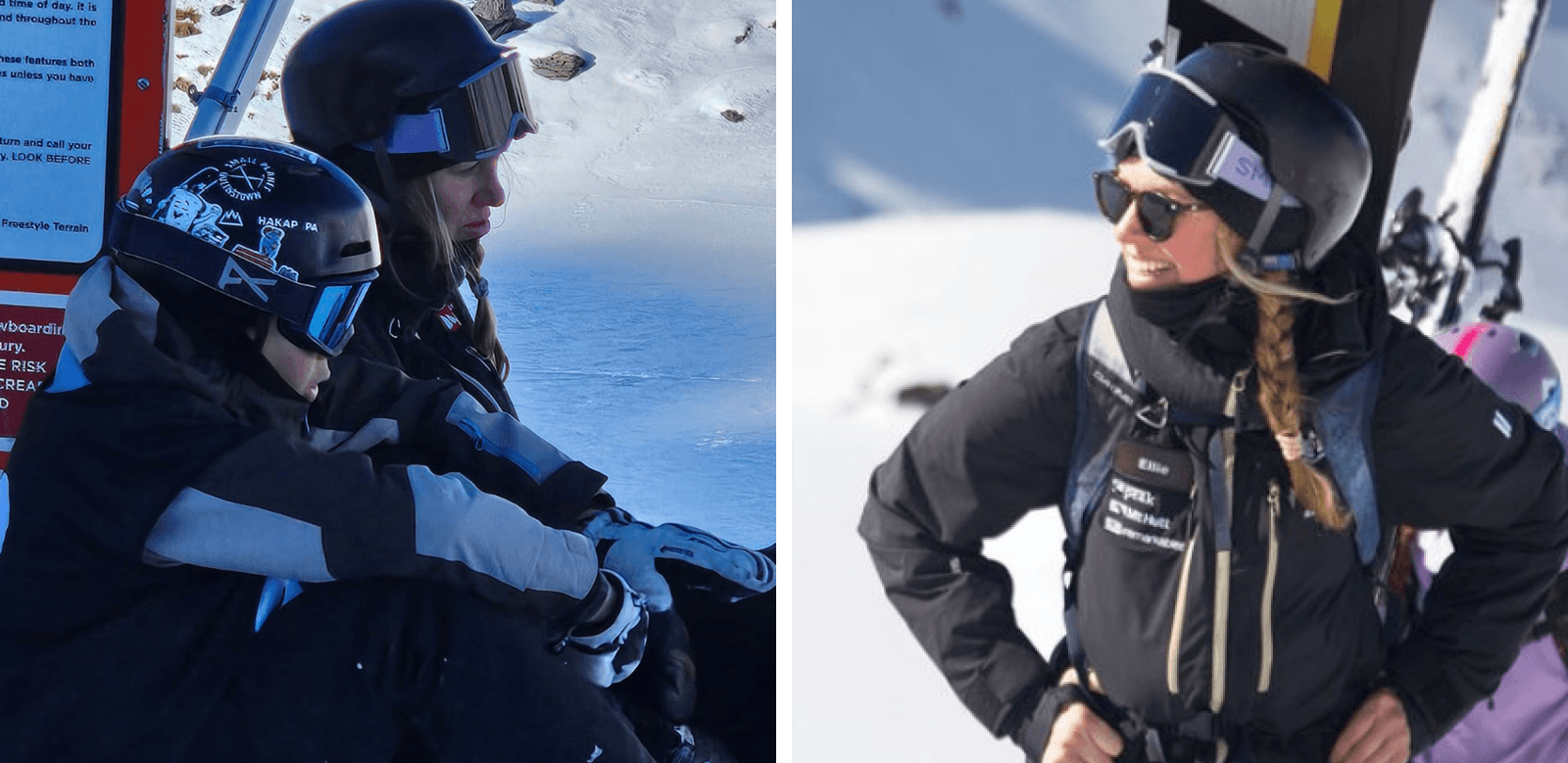
Ellie Tresidder
Ellie Tresidder
- Coach Profile
When Ellie Tresidder was a kid, she was told she shouldn’t play sport again and that she’d need a knee replacement before she was 25.
“I cracked the end of my femur after two big crashes growing up – one off my bike and one off my trampoline within a week of each other.”
“We just ignored the advice,” laughs the Queenstown local.
Now Tresidder is the Head Coach of the Remarkables Freeride Programme, spending her days active on the mountain doing what she loves.
After finishing PE School in Dunedin, Tresidder was working in Melbourne as a personal trainer and exercise physiologist when, in 2009, she decided she needed a break.
She enrolled in a snowboard instructors’ course in New Zealand and committed to a three-month sabbatical.
Having “stretched the truth” slightly about her snowboarding ability to get onto the instructors’ course, Tresidder says she learnt on the go — and found it exhilarating. So much so that she never returned to Melbourne, instead choosing life on the snow and working her way through different levels of certification in the instructing and coaching world.
“I went up the mountain a couple of times at uni, but I was lucky I could pick up snowboading fast enough to pass the exam on my instructors’ course. I’ve really just learnt on the job. I had coaching and teaching skills, just had to learn the sport”
Graduating from snowboard instructing into freeride coaching took time, and her first coaching role came while working at Sierra-at-Tahoe in the United States. During Covid, a coaching position opened at The Remarkables and Tresidder jumped at the chance.
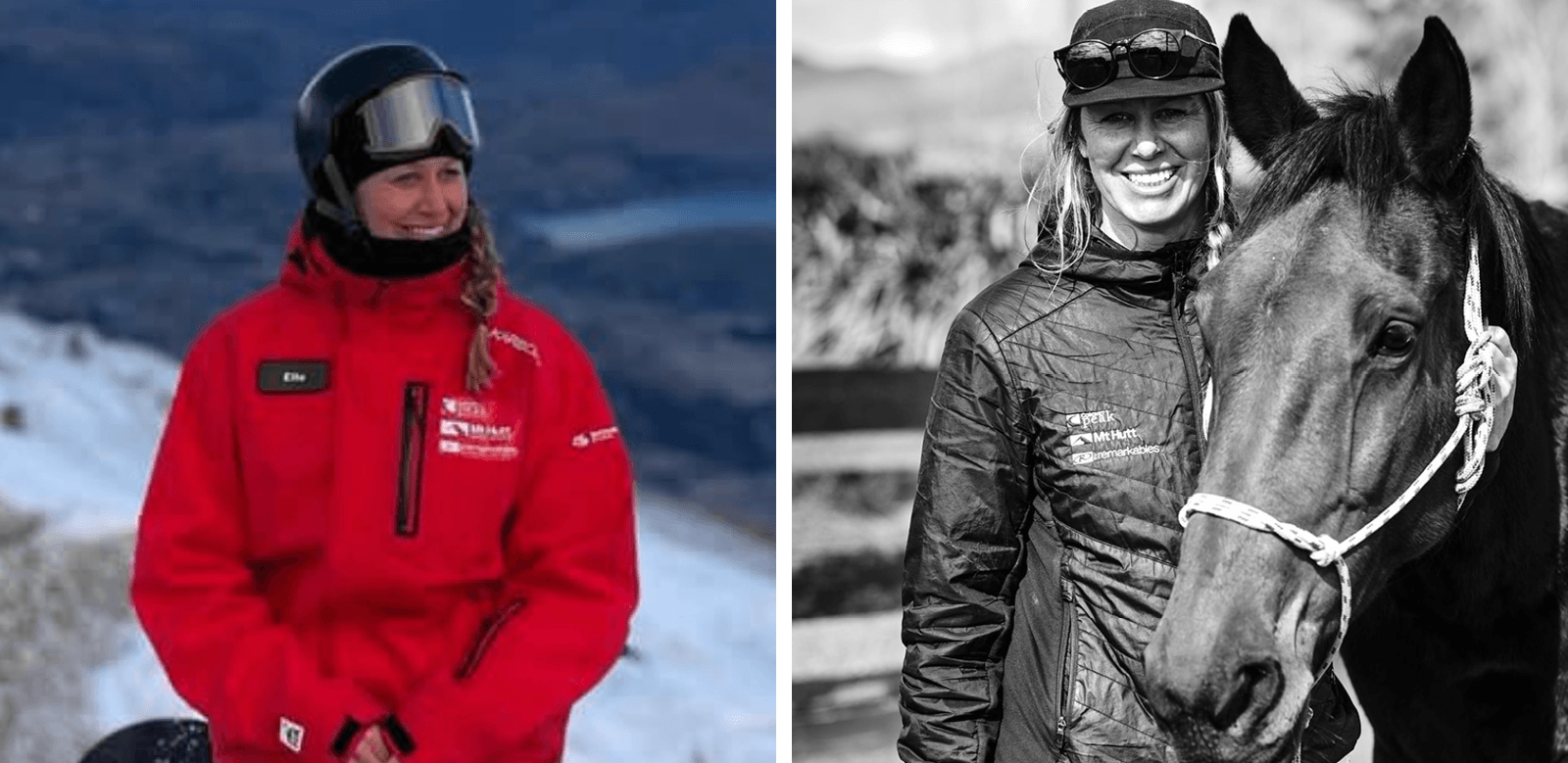
It’s not a typical snowboarding coaching pathway says Tresidder as most coaches have come from a competitive snowboarding background but since the age of 12 Tresidder has been coaching.
A former national level competitive swimmer Tresidder completed her Learn to Swim certification when she was 12 and starting swim teaching once she’d completed the necessary contact hours.
“I was in form two (year 8) coaching 5 and 6 year olds at Waikanae Swimming Club – it was really cool that one of the parents just put the opportunity out there and I just grabbed it.”
Tresidder stopped competitive swimming after her first year at university – a sport which she loved and took up due to non-weight bearing nature and her knee history. She laughs “I’m also 6ft so gymnastics has never going to work out for me.”
She did coach gymnastics in Dunedin after taking a Gymnastics Paper as part of her PE Degree and the lecturer asked her if she could you come and help a school out.
“So by the time I eventually got to Snowsports I had a background in standing in front of people and coaching.”
Her coaching philosophy is simple yet powerful.
“To empower power people – I want to help them be the best they can be.”
All her initial coaching jobs, she reflects, “just fell at me” — and she grabbed them with both hands. It’s the same spirit she now sees in her athletes as they charge down the mountain: courageous and willing to lean into the unknown.
Freeride Snowboarding is all about riding natural mountain terrain — from powder and steep faces to cliffs and backcountry lines — with creativity, flow, and control. Unlike terrain park riding, freeride challenges snowboarders to adapt to the mountain and choose their own path down it.
“My job is to really understand the athlete’s skill set, understand how they feel about their skill set, and find appropriate terrain to practise that on,” says Tresidder.
At times, Tresidder and her athletes will use freestyle features — like the park and pipe that New Zealand has become renowned for on the Winter Olympic and X Games stage — to build skills before taking them into natural terrain.
“If the riders are learning spins or even flips, we would learn it on a manufactured jump and then we’d take it to a cliff.”
While Tresidder says the word “cliff” nonchalantly, that’s the reality of the business she’s in coaching athletes currently aged 12 to 14.
“My job is about developing skills in athletes to be able to make the right assessment of the line, skill, and snow conditions. The kids are dropping 2 maybe 3 times their own height so 5-15 feet. There is a lot of trust and communication involved to get to that point.”
The athletes in Tresidder’s group are now riders she first saw as eight to 10-year-olds, and she says watching their development is the most rewarding part of the role.
“They grow up a lot between seasons. It’s really sick.”
Free ride athletes tend to peak around their low to mid 20s which she says is quite similar to the freestyle teammates.
“It’s like gymnastics in a more dangerous space!”
Tresidder is quick to point out the extreme highs and lows of freeride snowboarding, highlighting the importance of both technical ability and mountain assessment skills.
She knows the mountain like the back of her hand and is constantly talking with athletes and other coaches to help make the best performance decisions.
“Naturally I’m always scanning the mountain and chatting with other teams about what’s on and what’s not,” says Tresidder explaining it’s like a surfer going to a beach and constantly evaluating the surf conditions.
The reality, she says, is that they are still young teenagers. Her observation is that generally when coaching boys she often needs to pull them back slightly, while with girls she is encouraging them to step forward because she knows they have the skills to do it.
Tresidder describes herself as a “free-range kid” who grew up outside and hated being indoors, so mountain life — going to work each day with friends, feels pretty special.
For 10 years, Tresidder chased back-to-back winters, instructing in New Zealand before heading to places like Japan and the United States. She even worked on an indoor dry slope in Malaysia. But eventually, with the help of Covid, she realised she also loved surfing and summer.
More often than not, Tresidder is the only female in coaches’ meetings before competitions, so earning a place on Te Hāpaitanga and being around other female coaches was a breath of fresh air.
“Te Hāpaitanga has definitely played a big role in why I’m still here and still excited about coaching. The network has been so valuable to me.”
She reflects it’s hard to quantify the impact of Te Hāpaitanga but with certainty she says it’s absolutely had a significant impact on female coaches.
There hasn’t been one stand out person who steered Tresidder’s coaching more a collection of mentors who have helped her journey. The words of Peter Bilous, an Avalanche Technologist who Tresidder met when she was doing her certification stand out when she enquired why aren’t his kids in school more.
“Pete told me that his kids (who have gone on to be extremely good skiers) learn more on the mountain than in school – I really understand that. His wisdom has always stayed with me.”
There are growing whispers that freeride could one day be added to the Winter Olympic programme — an exciting prospect for Tresidder and the athletes currently coming through the pathway.
“Freeride traditionally hasn’t traditionally been a coached sport, but because it’s growing and there’s so much talk about the Olympics, I would love to have athletes that go that far.”
ENDS